Protează Combinată de Grad Alimentar pentru Tutun
Compound Protease (Food Grade) este un preparat enzimatic solid cu activitate ridicată, dezvoltat special pentru aplicațiile de prelucrare a tutunului. Este formulat din mai multe enzime proteolitice cu activitate sinergică, permițând hidroliza eficientă a proteinelor din frunzele de tutun în condiții ușoare de prelucrare.
Prin descompunerea selectivă a proteinelor macromoleculare în peptide mici și aminoacizi liberi, acest preparat enzimatic ajută la reglarea compoziției chimice interne a frunzelor de tutun, îmbunătățește performanța de prelucrare și sporește calitatea senzorială generală.
Caracteristicile produsului
- Sistem de protează compus de calitate alimentară
- Activitate enzimatică ridicată în condiții de reacție ușoare
- Eficace în medii neutre până la slab acide
- Sub formă de pulbere solidă, ușor de dizolvat și aplicat
- Conceput special pentru aplicații de prelucrare a tutunului
Mecanismul de acțiune
În general, conținutul de proteine al tutunului flue-cured de înaltă calitate după vindecare este de aproximativ 7%-10%. Un conținut excesiv de ridicat de proteine este nefavorabil pentru calitatea tutunului, deoarece duce la reducerea combustibilității și contribuie la creșterea intensității, iritației și amăruirii. În timpul fumatului, degradarea proteinelor poate genera, de asemenea, compuși indezirabili care conțin azot. În plus, proteinele din tutun servesc drept suport pentru diverse substanțe dăunătoare sănătății umane. Atunci când compuși precum cafeina, nicotina și aminoacizii sunt supuși degradării termice la temperaturi ridicate, aceștia pot produce numeroase substanțe toxice cu molecule mici. Aceste produse de degradare interacționează în continuare cu alcaloizii tutunului în timpul fumatului.
Din punctul de vedere al clasificării calității tutunului, un conținut mai ridicat de proteine este în general asociat cu o calitate mai scăzută a tutunului. Prin urmare, hidroliza enzimatică este considerată o abordare eficientă pentru îmbunătățirea calității tutunului. În timpul prelucrării tutunului, degradarea enzimatică adecvată a proteinelor în substanțe cu molecule mici poate îmbunătăți calitatea tutunului. Aminoacizii liberi produși în timpul hidrolizei proteinelor joacă un rol semnificativ în reglarea echilibrului componentelor chimice din tutun.
Numeroase studii au arătat că degradarea enzimatică a proteinelor din tutun generează o serie de compuși cu molecule mici. Acești compuși pot participa în continuare la reacțiile Maillard și la procese chimice conexe, formând diverse substanțe aromatice și de gust. Produsele rezultate includ note de nuci, de prăjit, de caramel, de cacao, de fructe, specifice tutunului și de plante, care îmbogățesc în mod semnificativ aroma tutunului, îmbunătățesc calitatea fumatului și contribuie la reducerea mirosurilor nedorite de arsură și a mirosurilor străine. Ca rezultat, permeabilitatea fumului este îmbunătățită, calitatea generală a fumului este îmbunătățită, iar caracteristicile senzoriale ale tutunului sunt optimizate.
În plus, hidroliza proteinelor ajută la îmbunătățirea echilibrului proporțional al constituenților chimici din frunzele de tutun, ceea ce duce la o mai bună finețe și calitate a fumatului. Peptidele și aminoacizii cu lanț scurt produși prin degradarea proteinelor pot participa, de asemenea, la reacții chimice ulterioare cu zaharuri, compuși fenolici și alte molecule mici, contribuind la îmbunătățirea suplimentară a performanțelor de fumat.
Beneficii în prelucrarea tutunului
- Reduce asprimea, înțepătura și amărăciunea
- Îmbunătățește combustibilitatea tutunului
- Îmbunătățește bogăția și profunzimea aromei
- Îmbunătățește finețea fumului și senzația în gură
- Ajută la diminuarea notelor neplăcute și a mirosurilor nedorite
- Sprijină calitatea constantă și stabilă a tutunului
Domenii de aplicare
Adaosul de protează neutră favorizează degradarea proteinelor din frunzele de tutun, ducând la reducerea combustibilității și, în același timp, la scăderea intensității, iritației și amăruirii. Acest proces contribuie la îmbunătățirea calității tutunului și îmbogățește efectiv aroma tutunului, îmbunătățind experiența generală de fumat.
Prin reducerea mirosurilor nedorite de arsură și a notelor negative, fumul devine mai permeabil și mai fin, contribuind la îmbunătățirea calității fumului. Tratamentul enzimatic contribuie, de asemenea, la optimizarea compoziției chimice interne a frunzelor de tutun, ducând la o proporție mai echilibrată a componentelor și la o îmbunătățire vizibilă a calității senzoriale.
Dozaj recomandat
Rata de adăugare tipică: 50-300 g pe tonă metrică de materie primă de tutun. Doza optimă trebuie determinată prin teste pilot în funcție de soiul de tutun, condițiile de prelucrare și rezultatele senzoriale dorite.
Mod de utilizare
Doza recomandată este în general 50-300 g pe tonă metrică de materie primă de tutun. Se îndepărtează tulpinile de pe frunzele de tutun, se mărunțesc sau se taie după cum este necesar și se prepară o soluție enzimatică prin dizolvarea unei cantități adecvate de protează în apă la o concentrație specificată.
Pe baza ratei de aplicare prestabilite, soluția enzimatică se aplică uniform pe frunzele de tutun cu ajutorul unui echipament automat de pulverizare sau de amestecare pentru a asigura o distribuție uniformă. Tutunul tratat este apoi plasat într-o cameră cu temperatură și umiditate controlate și supus hidrolizei enzimatice în condiții experimentale definite.
După tratament, frunzele de tutun sunt inactivate la 120°C, urmată de tăiere și pregătire pentru prelucrarea ulterioară. Din cauza diferențelor dintre caracteristicile materiei prime și parametrii de prelucrare în funcție de aplicații, metoda optimă de adăugare și doza trebuie determinate prin teste preliminare.
Condiții de lucru optime
- Interval de temperatură: 30–60 °C
- Temperatura optimă: 40–50 °C
- Intervalul de lucru al pH-ului: 2.5-10.0
- Interval de pH optim: 2.5-8.5
Forma produsului
- Solubilitate: Dispersabil în apă
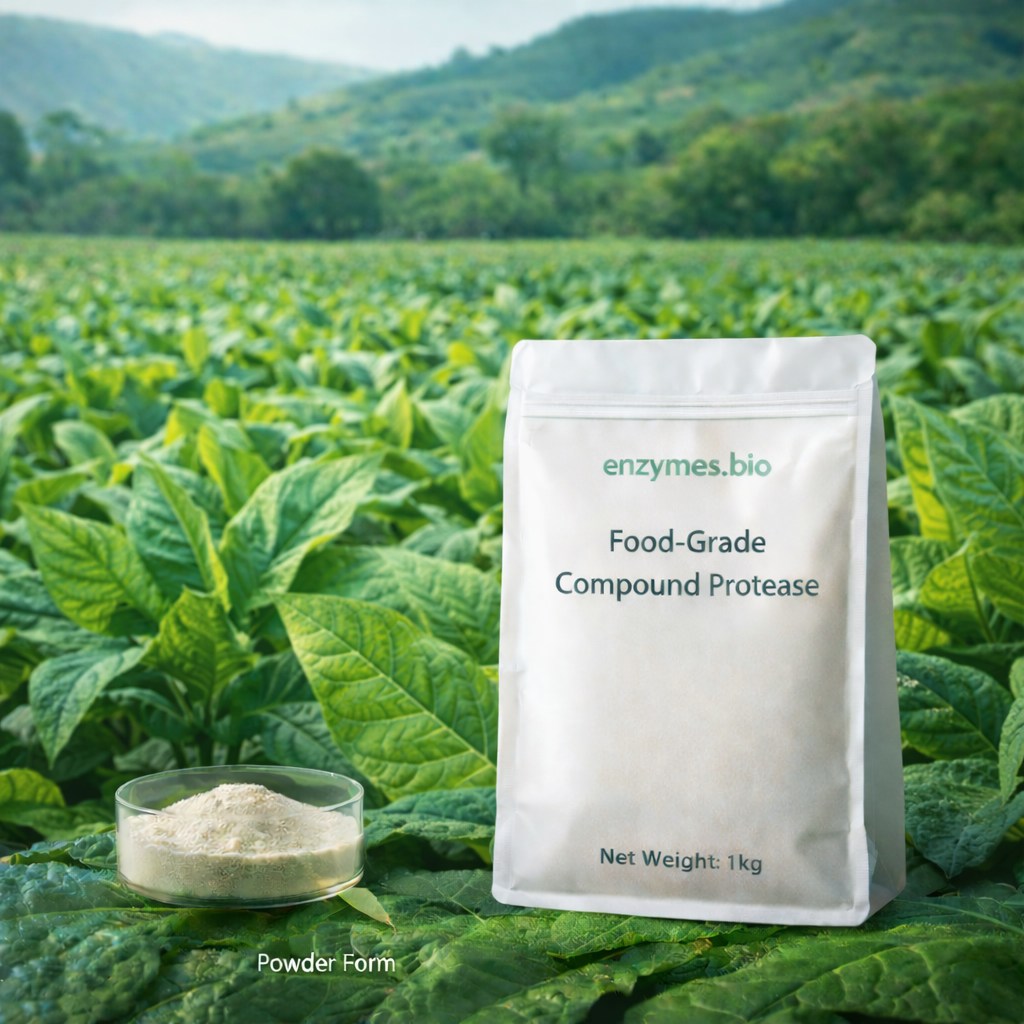
- Ambalare: Livrat în 1 kg/sac, pungă sigilată din folie de aluminiu de calitate alimentară. Vă rugăm să rețineți că imaginea produsului are scop ilustrativ. Ambalajul real poate diferi.
Indicatori de calitate și siguranță
- Plumb (Pb): ≤ 5,0 mg/kg
- Arsenic total (As): ≤ 3,0 mg/kg
- Număr total de plăci: ≤ 50.000 UFC/g
- Coliforme: ≤ 30 CFU/g
Perioada de valabilitate
12 luni atunci când este depozitat într-un loc răcoros, uscat și în condiții de etanșare.