
Bulk Fish Processing Enzymes for Industry
How Fish Processing Enzymes Work
Optimized Protein Hydrolysis
High-activity protease fish processing solutions improve protein breakdown, yield, and digestibility in fish meal and hydrolyzed products.
Bulk Industrial Supply
Reliable large-volume production with consistent enzyme activity specifications for continuous processing operations.
Global Logistics Support
Stable formulations with documented shelf life and export-ready packaging for international seafood and aquaculture markets.
Enzyme Types for Fish Processing Applications
Alkalická proteáza
Hydrolyzes fish proteins for fish meal, collagen hydrolysate, and protein concentrate production.
Lipáza
Reduces fishy odour and improves oil quality in fish processing and aquaculture feed formulation.
Fytáza
Releases bound phosphorus from plant-based feed ingredients to improve nutrition and reduce waste discharge.
Beta-glukanáza
Degrades beta-glucans in aquaculture feed to improve digestibility and feed conversion ratio.
celuláza
Breaks down plant fibre in aquatic feed for improved nutrient availability and growth performance.
Fish Processing Enzyme Guide: Functions, Dosage & Applications
Alkalická proteáza
Fish Protein Hydrolysis for Hydrolyzate & Sauce Production
Funkce: Alkaline protease is the primary enzyme for fish protein hydrolysis (FPH) — converting whole fish, fish trim, and fish processing by-products into soluble protein hydrolyzates, amino acid concentrates, and bioactive peptides. It operates efficiently at pH 7.5–9.0, degrading myosin, actin, and collagen at rates significantly faster than autolysis or acid hydrolysis.
Typické dávkování: 0.1–0.5% w/w of fish substrate. Activity: 100,000–800,000 U/g. Temperature optimum: 45–55°C, pH 7.5–9.0. Hydrolysis time: 2–6 hours for 50–80% degree of hydrolysis. Inactivate by heat (85°C/15 min) or pH adjustment (below 4.0). Recover protein by centrifugation.
Aplikace: Fish protein hydrolyzate (FPH) for aquaculture feed and pet food, fish sauce acceleration (reduce traditional 12–18 month fermentation to 2–4 weeks), fish silage for fertilizer, bone meal deproteinization, marine collagen hydrolyzate.
Nakupujte ve velkém: Bulk Protease - alkalická proteáza pro výrobu hydrolyzátu rybích bílkovin →
Lipáza
Fish Oil Hydrolysis & Omega-3 Enrichment
Funkce: Lipase hydrolyzes fish oil triglycerides to release free fatty acids including EPA and DHA (omega-3 long-chain polyunsaturated fatty acids). Enzymatic hydrolysis produces a glycerol-free omega-3 concentrate in free fatty acid form — which has higher bioavailability than triglyceride-form omega-3. Also used for flavor modification in fermented fish products (anchovy, shrimp paste).
Typické dávkování: 0.05–0.2% w/w of fish oil. Activity: 10,000–100,000 LU/g. Temperature optimum: 30–45°C (lipase is denatured at higher temperatures that degrade omega-3 fatty acids). Contact time: 4–12 hours. Separate FFAs from glycerol by molecular distillation or chromatography.
Aplikace: Omega-3 free fatty acid concentrate production, fish oil partial hydrolysis for emulsification, fermented fish product flavor development (fish sauce, anchovy paste), fish oil by-product valorization.
Nakupujte ve velkém: Bulk Lipase — lipase for fish oil hydrolysis & omega-3 enrichment →
Fytáza
Phosphorus Bioavailability in Aquaculture Feed
Funkce: Phytase degrades phytic acid (inositol hexaphosphate) in plant-based feed ingredients — soybean meal, canola, wheat bran, corn DDGS — releasing the bound phosphorus for fish absorption. Monogastric fish and shellfish have negligible endogenous phytase, so the phosphorus in plant ingredients is largely unavailable without enzyme supplementation. Phytase also releases protein, minerals, and energy bound in the phytate complex.
Typické dávkování: 500–1,000 FTU/kg feed (Phytase Units). Add to premix during feed pelleting at ≤70°C (thermostable variant) or coat onto pellet post-pelleting (standard variant). Reduces supplemental dicalcium phosphate requirement by 30–60%, cutting feed cost and reducing effluent phosphorus.
Aplikace: Salmon, tilapia, shrimp, carp, catfish, and pangasius feeds. Mandatory in environmentally certified aquaculture (ASC, BAP) to reduce phosphorus discharge to waterways. Particularly effective in high-inclusion soybean meal diets.
Nakupujte ve velkém: Bulk Phytase — thermostable phytase for aquafeed phosphorus release →
Beta-glukanáza
Fiber Digestion for Improved Feed Conversion in Aquaculture
Funkce: Beta-glucanase degrades beta-1,3 and beta-1,4 glucans in plant-based aquafeed ingredients — particularly barley, oats, and yeast cell walls. These viscous glucans reduce gut transit rate, interfere with nutrient absorption, and increase intestinal mucus production in fish. Beta-glucanase reduces digesta viscosity, improving nutrient absorption and feed conversion ratio (FCR).
Typické dávkování: 200–800 U/kg feed. Add at premix stage or to feed ingredients before pelleting. Compatible with phytase and cellulase in multi-enzyme feed supplements.
Aplikace: Barley and oat-containing aquafeeds, high-inclusion cereal diets for omnivorous species (tilapia, carp, catfish), yeast-supplemented immunostimulant diets for salmonids.
celuláza
Plant Fiber Breakdown for Herbivorous & Omnivorous Fish Species
Funkce: Cellulase degrades cellulose in the cell walls of plant ingredients used in fish feed — soybean meal, alfalfa, wheat bran, and other fibrous materials. Fish and shellfish produce no endogenous cellulase. Exogenous cellulase disrupts plant cell walls, releasing nutrients trapped within, improves dry matter digestibility, and reduces intestinal load of indigestible fiber.
Typické dávkování: 1,000–5,000 U/kg feed. Add at premix or ingredient milling stage. Synergistic with beta-glucanase and hemicellulase in multi-carbohydrase blends for maximum fiber breakdown.
Aplikace: Tilapia, grass carp, silver carp, and other herbivorous/omnivorous species with plant-dominant diets. Shrimp and prawn diets with algae or plant meal inclusions. Also used in abalone and sea urchin feeds (high seaweed inclusion).
Nakupujte ve velkém: Bulk Cellulase — cellulase for plant fiber digestion in aquafeed →
Our Fish Processing Enzyme Products
-
Prodej!
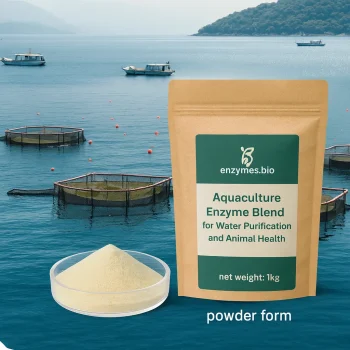 Enzymy z akvakultury
Směs enzymů pro akvakulturu pro čištění vody a zdraví zvířat
US$116.66Původní cena byla: US$116.66.US$104.99Aktuální cena je: US$104.99. Nákup -
Prodej!
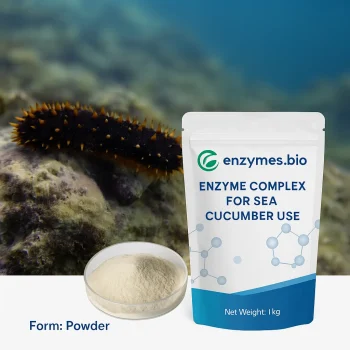 Enzymy z akvakultury
Komplex mořských enzymů z okurky - krmná přísada pro akvakulturu
US$121.10Původní cena byla: US$121.10.US$108.99Aktuální cena je: US$108.99. Nákup -
Prodej!
 Enzymy z akvakultury
Krabí enzymový komplex - biologická přísada do krmiv pro kraby z akvakultury
US$121.10Původní cena byla: US$121.10.US$108.99Aktuální cena je: US$108.99. Nákup -
Prodej!
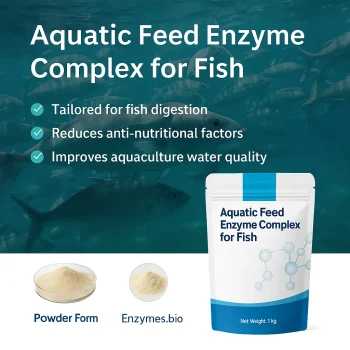 Enzymy z akvakultury
Enzyme-Aquatic Feed Enzyme Complex pro ryby
US$121.10Původní cena byla: US$121.10.US$108.99Aktuální cena je: US$108.99. Nákup -
Prodej!
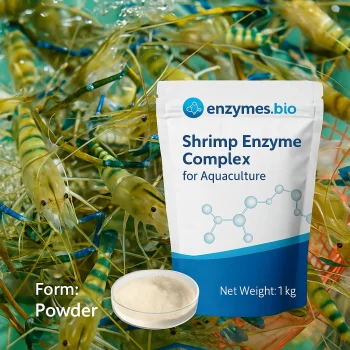 Enzymy z akvakultury
Enzymový komplex pro krevety - multienzymová přísada do krmiva pro krevety
US$121.10Původní cena byla: US$121.10.US$108.99Aktuální cena je: US$108.99. Nákup
Why Source Fish Processing Enzymes from enzymes.bio?
Nízké MOQ od 1 kg
Flexibilní množství objednávek pro vzorky pro výzkum a vývoj nebo celé výrobní série. Rozšiřujte, až budete připraveni.
K dispozici jsou vlastní směsi
Potřebujete specifický poměr enzymů nebo multienzymový komplex? Náš tým připravuje směsi na míru pro váš proces.
Globální přeprava
Dodávky DHL, FedEx a USPS do více než 180 zemí. Pro enzymy citlivé na teplotu je k dispozici přeprava za studena.
Technická podpora
Pokyny pro aplikaci a doporučení dávkování od našich specialistů na enzymy.