
Industrial Enzymes in Meat Processing Supplier
How Meat Processing Enzymes Work
Improved Tenderness Control
Optimize texture and reduce toughness with controlled protease meat processing solutions for red meat, poultry, and seafood.
Higher Yield Recovery
Increase protein extraction and by-product utilization through targeted enzymatic hydrolysis of meat and collagen streams.
Consistent Enzyme Activity
Standardized activity units and batch testing ensure predictable performance in large-scale meat industry operations.
Enzyme Types for Meat Processing Applications
Bromelain
Natural plant-derived enzyme that tenderises meat by breaking down muscle proteins and collagen fibres.
Neutraalne proteaas
Improves tenderness, texture, and water-holding capacity in whole muscle and restructured meat products.
Aluseline proteaas
Hydrolyzes meat byproducts and offal for protein meal, pet food, and hydrolysate production.
Lipaas
Develops flavour compounds in cured meats and fermented sausages through controlled fat hydrolysis.
Trüpsiin
Digests collagen and connective tissue proteins for meat restructuring and efficient protein recovery.
Meat Processing Enzyme Guide: Functions, Dosage & Applications
Bromelain
Meat Tenderizing via Myofibrillar Protein Hydrolysis
Funktsioon: Bromelain is a cysteine protease extracted from pineapple stem that preferentially cleaves myosin, collagen, and connective tissue proteins. Unlike heat tenderizing, bromelain acts at chilled temperatures (4–25°C), allowing it to work during marination or brining without cooking the meat. It targets both myofibrillar proteins (actin, myosin) and connective tissue, improving shear force values measurably.
Tüüpiline annus: 10–100 ppm (mg/kg) of meat weight. Activity: 100,000–600,000 GDU/g or 50,000–300,000 MCU/g. Lower dosage (10–30 ppm) for controlled tenderizing of premium cuts; higher dosage (50–100 ppm) for tenderizing tougher cuts or restructured meat products. Contact time: 30 minutes–4 hours at 2–8°C.
Rakendused: Steak and chop tenderizing (marinades, injection, tumbling), restructured meat products, pet food protein hydrolysis, portion-control portion improvement. Widely used in hotel and food service supply chains.
Pood lahtiselt: Bulk Bromelain — 1,000–3,000 GDU/g for meat & nutraceuticals →
Neutraalne proteaas
Controlled Proteolysis for Aging Simulation & Flavor Development
Funktsioon: Neutral protease hydrolyzes muscle proteins at neutral pH (6.0–7.5) with moderate activity, mimicking the natural dry-aging proteolysis by endogenous enzymes (calpains). It releases umami-contributing peptides and amino acids (glutamate, IMP precursors) while minimizing the bitter peptides associated with alkaline proteases.
Tüüpiline annus: 0.005–0.02% w/w of meat weight. Activity: 50,000–400,000 U/g. Inject or tumble into meat at 2–8°C; contact time 2–12 hours. Enzyme is inactivated by cooking (>70°C). Lower dosage for subtle flavor enhancement; higher dosage for accelerated aging or protein hydrolyzate production.
Rakendused: Accelerated dry-age simulation in wet-aged beef, cured and fermented meats, meat protein hydrolyzates for stock/flavoring, meat-based pet food flavor enhancement.
Pood lahtiselt: Bulk Protease — neutral, alkaline & acid protease for meat processing →
Aluseline proteaas
Aggressive Protein Hydrolysis for Recovery & Hydrolyzate Production
Funktsioon: Alkaline protease operates at pH 7.5–11.0 and produces more aggressive, complete protein hydrolysis than neutral protease. It is preferred for collagen hydrolysis, mechanical deboning residue recovery, and production of functional meat protein concentrates. Less suitable for whole-muscle tenderizing due to bitterness potential at high dosage.
Tüüpiline annus: 0.01–0.05% w/w of substrate. Activity: 100,000–800,000 U/g. Temperature optimum: 40–55°C. Adjust pH to 7.5–9.0 for optimal activity. Inactivate by dropping pH below 4.5 or heating to >80°C.
Rakendused: Mechanical deboning residue (MDR) processing, collagen hydrolyzate production (for gelatin alternatives), fish sauce/shrimp paste acceleration, animal by-product valorization, pet food ingredient production.
Lipaas
Fat Hydrolysis for Flavor Development & Rendered Fat Processing
Funktsioon: Lipase hydrolyzes triglycerides in meat and animal fat into free fatty acids, monoglycerides, and glycerol. In cured and fermented meats (salami, prosciutto), controlled lipolysis generates flavor compounds. In rendered fat processing, lipase can modify fatty acid profiles or produce partial glycerides for food-grade emulsification applications.
Tüüpiline annus: 0.01–0.1% w/w of fat substrate. Activity: 10,000–100,000 LU/g. Temperature optimum: 30–45°C. Inactivated by heat >65°C.
Rakendused: Fermented meat flavor development (dry-cured sausage, salami), rendered animal fat modification, lard partial hydrolysis, flavor compound production for meat seasonings.
Pood lahtiselt: Bulk Lipase — lipase for fat modification in cured & fermented meats →
Trüpsiin
Specific Serine Protease for Protein Digestion & Research Applications
Funktsioon: Trypsin is a serine endopeptidase that cleaves peptide bonds specifically at the C-terminal side of lysine and arginine residues. In meat processing, it is used for controlled functional protein modification and for production of bioactive peptides with specific cleavage patterns. Also used in research-grade protein digestion and pharmaceutical applications.
Tüüpiline annus: 0.001–0.05% w/w of protein substrate. Activity: 1,000–10,000 BAEE Units/mg. Temperature optimum: 37°C, pH 7.5–8.5. Inactivated by serine protease inhibitors or heat.
Rakendused: Bioactive peptide production from muscle proteins, research-grade protein digestion, pharmaceutical collagen hydrolyzate production, cell culture trypsinization (tissue culture grade available).
Our Meat Processing Enzyme Products
-
Müük!
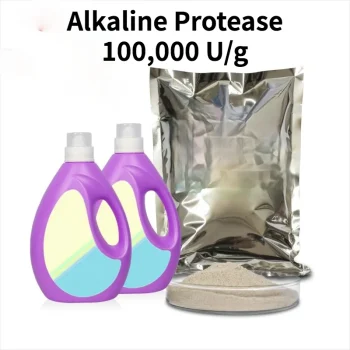 Aluseline proteaas
Aluseline proteaas 100 000 U/g Kala ja krevettide jäägid hüdrolüüs proteaas Bacillus Licheniformis proteaas
US$99.99Algne hind oli: US$99.99.US$89.99Praegune hind on: US$89.99. ostma -
Müük!
 Liha töötlemise ensüümid
Kollageeni proteaas kalanaha veisenaha töötlemine bioloogiline ensüüm kollageeni hüdrolüüs
US$144.44Algne hind oli: US$144.44.US$129.99Praegune hind on: US$129.99. ostma -
Müük!
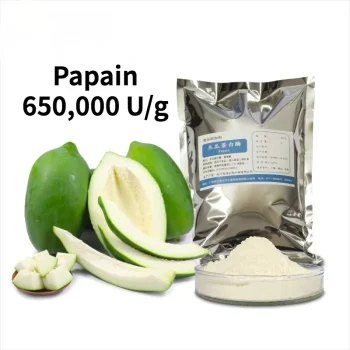 Liha töötlemise ensüümid
Papaiin 650 000 U/g seanaha kala kollageeni hüdrolaasi ensüüm
US$124.00Algne hind oli: US$124.00.US$111.99Praegune hind on: US$111.99. ostma -
Müük!
 Liha töötlemise ensüümid
Kana maksa hüdrolüüsi ensüüm
US$111.11Algne hind oli: US$111.11.US$100.00Praegune hind on: US$100.00. ostma -
Müük!
 Liha töötlemise ensüümid
Liha valgu hüdrolüüsi ensüüm
US$157.77Algne hind oli: US$157.77.US$141.99Praegune hind on: US$141.99. ostma
Why Source Meat Processing Enzymes from enzymes.bio?
Madal MOQ alates 1 kg
Paindlikud tellimiskogused teadus- ja arendustegevuse näidiste või täieliku tootmise jaoks. Suurendage tootmismahtu, kui olete valmis.
Saadaval kohandatud segud
Kas vajate konkreetset ensüümide suhet või mitme ensüümi kompleksi? Meie meeskond koostab teie protsessi jaoks kohandatud segusid.
Ülemaailmne laevandus
DHL, FedEx ja USPS täidavad tellimusi enam kui 180 riiki. Temperatuuritundlike ensüümide jaoks on saadaval külmaahela saatmine.
Tehniline tugi
Meie ensüümispetsialistide juhised ja annustamissoovitused.