Endüstri için Bira Enzimleri Dökme Tedarikçisi

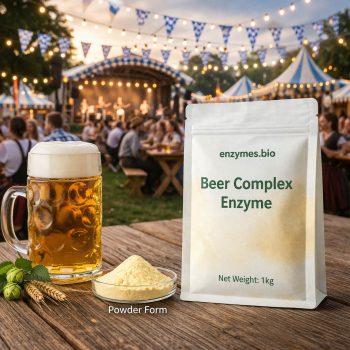
enzymes.bio, bira fabrikaları, gıda üreticileri, işleyiciler ve formülatörler için tutarlı toplu hacimler sağlayan bir bira mayalama enzimi tedarikçisidir. Ticari üretimi güvenilir tedarik, dokümantasyon ve teknik verilerle destekliyoruz.

Bira Enzimleri Nasıl Çalışır?

Enzimler, belirli biyokimyasal reaksiyonları hızlandıran biyolojik katalizörlerdir. Bira yapımında kullanılan enzimler, sert kimyasallar olmadan ölçülebilir sonuçlar verir.

Toplu Üretime Hazır

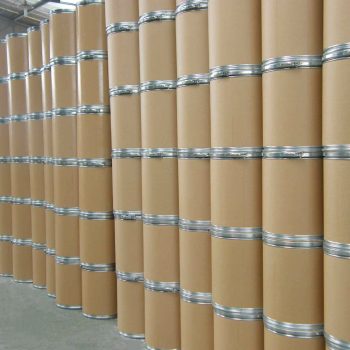
Endüstriyel ölçekte sürekli bira üretimini desteklemek için varillerde veya kutularda tedarik edilen yüksek aktiviteli bira enzimleri.

Süreç Optimizasyonu

Hedefe yönelik enzim çözümleri, ezme, fermantasyon ve terbiye aşamalarında nişasta dönüşümünü, viskozite azaltımını ve arıtma verimliliğini iyileştirir.

Tam Teknik Dokümantasyon

Her sevkiyat, kalite kontrol uyumluluğu için COA, aktivite spesifikasyonları, stabilite verileri ve uygulama kılavuzunu içerir.

Biracılık Uygulamaları için Enzim Çeşitleri

Prosesiniz için doğru enzimi seçin. Bira enzimleri uygulamaları için tekli enzimler ve çoklu enzim karışımları tedarik ediyoruz.
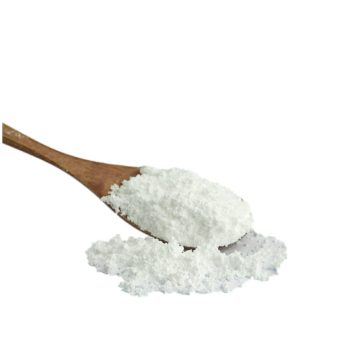
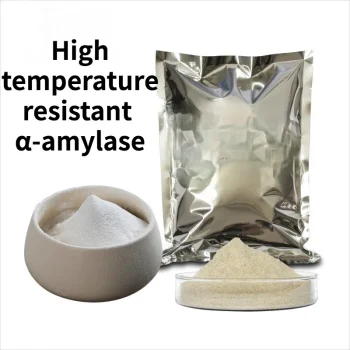
Alfa-Amilaz

Breaks down starch to fermentable dextrins during mashing for consistent wort production.

Glukoamilaz

Converts dextrins to glucose for complete fermentation, producing dry or low-carb beer styles.

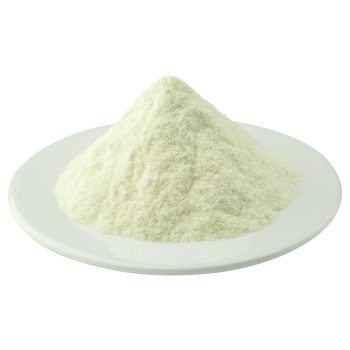
Beta-Glukanaz

Degrades beta-glucans from barley and oats to reduce wort viscosity and improve filtration.

Nötr Proteaz

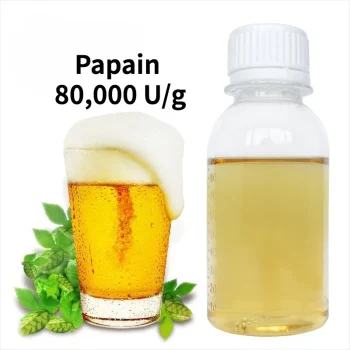
Breaks down proteins to improve chill haze stability, foam retention, and yeast nutrition.

Beta-Amylase

Cleaves maltose from dextrins to boost fermentable sugar content and increase alcohol yield.

Brewing Enzyme Guide: Functions, Dosage & Applications

Alfa-Amilaz

Starch Liquefaction for High-Adjunct Mashes & Distillery

İşlev: Alpha-amylase randomly cleaves α-1,4 glycosidic bonds in starch, rapidly reducing viscosity and producing soluble dextrins. It is essential when brewing with unmalted adjuncts (corn, rice, cassava, sorghum) that lack the native amylase content of malted barley. Thermostable variants remain active at 85–95°C for simultaneous saccharification applications.

Tipik dozaj: 0.01–0.1% w/w of grain or mash. Activity: 10,000–40,000 SKB/g (Sandstedt-Kneen-Blish units). Add at mash-in; contact time 30–60 minutes at 60–72°C (mesophilic) or 85–95°C (thermostable). Confirmed by iodine starch test.

Uygulamalar: High-adjunct lager brewing, rice beer, corn-based brewing, sorghum beer (Africa), whisky and grain spirit mash liquefaction, bioethanol production.

Toplu alışveriş: Bulk Amylase — bacterial alpha-amylase for high-adjunct mashing →

Alfa-amilaz ürünlerine göz atın →

Glukoamilaz

Complete Saccharification for Dry Beer & Distillery

İşlev: Glucoamylase (amyloglucosidase) cleaves both α-1,4 and α-1,6 bonds in dextrins, releasing glucose monomers. Unlike alpha-amylase, glucoamylase completes fermentation by converting all dextrins to fermentable glucose — producing a fully attenuated, dry, low-carbohydrate beer. It is the primary saccharification enzyme in distillery and light beer production.

Tipik dozaj: 0.01–0.1% w/w of grain. Activity: 10,000–100,000 AGU/g. Add at saccharification stage (60–65°C, pH 4.0–5.5). Can be added directly to fermenter for simultaneous saccharification and fermentation (SSF). pH optimum is more acidic than alpha-amylase.

Uygulamalar: Light beer (reduced calorie), dry beer, craft lager attenuation correction, whisky/grain spirit saccharification, bioethanol, gluten-free beer from enzyme-treated barley.

Toplu alışveriş: Bulk Amylase — glucoamylase for complete saccharification & dry beer →

Browse glucoamylase products →

Beta-Glukanaz

Viscosity Reduction for Lautering & Filtration

İşlev: Beta-glucanase degrades beta-glucans — cell wall polysaccharides from barley, wheat, and oats that dissolve in wort and dramatically increase viscosity. High wort viscosity causes lautering problems (stuck mash, poor runoff rate) and downstream filtration difficulties. Beta-glucanase breaks these polysaccharides into small oligosaccharides, restoring normal wort flow.

Tipik dozaj: 100–500 U/L wort. Add during mash protein rest (45–52°C) or directly to mash. For Botrytis-infected grain (higher beta-glucan content), increase dosage 2–3×. Activity: 10,000–100,000 U/g.

Uygulamalar: High-adjunct mashes, poorly modified malt, wheat beer and hefeweizen (high beta-glucan), rye beer, oat stout, low-quality barley malts in cost-reduced recipes.

Beta-glukanaz ürünlerine göz atın →

Nötr Proteaz

Free Amino Nitrogen (FAN) for Yeast Nutrition & Haze Reduction

İşlev: Neutral protease hydrolyzes barley and adjunct proteins during the mash protein rest, producing free amino nitrogen (FAN) — the primary nitrogen source for yeast during fermentation. Insufficient FAN causes sluggish fermentation, off-flavors (H₂S, fusel alcohols), and poor yeast health. Protease also degrades haze-forming protein-polyphenol complexes, improving chill haze stability.

Tipik dozaj: 0.01–0.05% w/w of grain. Activity: 50,000–400,000 U/g. Add at protein rest (45–52°C, pH 5.2–5.8, 15–30 minutes). Target wort FAN: >150 mg/L for healthy fermentation. Do not over-proteolyze — excessive protease destroys head retention proteins.

Uygulamalar: High-adjunct brewing (maize, rice), unmalted grain mashes, haze-free lager production, gluten-free beer (combined with glucoamylase), craft beer FAN correction.

Toplu alışveriş: Bulk Protease — neutral protease for FAN production & haze reduction →

Nötral proteaz ürünlerine göz atın →

Beta-Amylase

Maltose Production for Fermentability & High-Gravity Brewing

İşlev: Beta-amylase cleaves maltose units from the non-reducing ends of starch chains, producing the primary fermentable sugar in beer wort. While malted barley contains native beta-amylase, high-temperature mashing, high-adjunct loads, or poor malt quality can limit fermentability. Supplemental beta-amylase ensures complete conversion of available starch to maltose.

Tipik dozaj: 0.005–0.05% w/w of grain. Activity: 100–2,000 Deg/g. Temperature optimum: 60–65°C, pH 5.3–5.8. Denatured above 70°C — must be added during low-temperature saccharification stage.

Uygulamalar: High-gravity brewing (>14°P), light lager (maximal fermentability), malt-extract production, Scotch whisky mash for high fermentable extract, corn-heavy adjunct recipes.

Toplu alışveriş: Bulk Amylase — beta-amylase for maltose production & fermentability →

Browse beta-amylase products →

Biracılık Enzim Ürünlerimiz

Tüm 21 bira enzimi ürün yelpazemize göz atın. Tüm ürünler, talep üzerine teknik veri sayfaları ve COA ile birlikte toplu miktarlarda mevcuttur.

Neden Kaynak Bira Enzimleri enzymes.bio'den?

1 kg'dan başlayan düşük MOQ

Ar-Ge numuneleri veya tam üretim çalışmaları için esnek sipariş miktarları. Hazır olduğunuzda ölçeklendirin.

Özel Karışımlar Mevcuttur

Belirli bir enzim oranına veya çoklu enzim kompleksine mi ihtiyacınız var? Ekibimiz prosesiniz için özel karışımlar formüle eder.

Küresel Nakliye

DHL, FedEx ve USPS ile 180'den fazla ülkeye gönderim. Sıcaklığa duyarlı enzimler için soğuk zincir gönderimi mevcuttur.

Teknik Destek

Enzim uzmanlarımızdan uygulama rehberliği ve dozaj önerileri.

Sıkça Sorulan Sorular

We supply alpha-amylase, glucoamylase, beta-glucanase, neutral protease, and beta-amylase — all brewing-grade with activity certificates. Other brewing enzymes (cellulase, xylanase, pullulanase) available on request.
Alpha-amylase randomly cleaves starch into dextrins (liquefaction) — fast and effective at 60–95°C, but leaves unfermentable dextrins. Glucoamylase then cleaves those dextrins all the way down to glucose (saccharification) — used when complete attenuation or high alcohol yield is required. For standard beer, use alpha-amylase only; for dry beer, distillery, or light beer, use both in sequence.
Add beta-glucanase if you experience: slow lautering/runoff, high wort viscosity, filtration difficulties, or if you are using high-adjunct mashes, wheat/oat/rye above 20% of grain bill, poorly modified malt, or Botrytis-infected grain. A simple viscosity test at 20°C on first runnings (should be <3 cP for easy filtering) can confirm the need. Dosage: 100–500 U/L, added at protein rest (45–52°C).
Target wort FAN of ≥150 mg/L for a healthy lager or ale fermentation (>200 mg/L for high-gravity ≥16°P). If your wort FAN falls below this due to high adjunct rates or under-modified malt, add neutral protease at the protein rest (45–52°C, 20 min). Dosage: 0.01–0.03% w/w grain. Verify FAN with Ninhydrin or OPA spectrophotometric assay.
Yes. For certified gluten-free beer from barley, use glucoamylase + neutral protease + beta-glucanase in the mash to fully hydrolyze starch and solubilize protein. The resulting beer has undetectable gluten by ELISA (R5 competitive method <5 ppm). Note: barley malt-based "gluten-free" beer may not be accepted in all markets — check local labeling regulations. Alternative: brew with certified GF grains (millet, rice, buckwheat).
Yes. Each brewing enzyme comes with a TDS covering activity units (SKB, AGU, U/g), temperature and pH optimum, recommended dosage, and shelf life. CoA per batch available on request.
MOQ is 1 kg for enzyme powders and 5 L for liquid concentrates. We supply craft breweries, regional breweries, distilleries, and bioethanol producers of all scales.
Add enzyme powders or liquid concentrates at mash-in with the water before adding grain, or directly to the mash at the appropriate temperature step. For alpha-amylase, add at the starch conversion step (63–72°C). For glucoamylase or beta-glucanase, add at protein rest or saccharification step. For SSF applications, add glucoamylase directly to the fermenter.
Powder enzymes: 12–24 months at ≤25°C, sealed packaging. Liquid enzymes: 12–18 months at 2–8°C. Thermostable alpha-amylase is more stable than standard mesophilic variants. Store away from moisture and heat.
Yes. We can formulate blended enzyme preparations for adjunct mash conversion, gluten reduction, viscosity control, or high-gravity fermentation — combining alpha-amylase, glucoamylase, beta-glucanase, and protease at optimized activity ratios. MOQ 5 kg, lead time 2–4 weeks.

Mayalama Enzimlerini Bugün Tedarik Etmeye Başlayın

Bira üretim hattınız için teknik özellikler, fiyatlandırma ve toplu tedarik seçenekleri talep etmek için ekibimizle iletişime geçin.