
Enzymer til forarbejdning af løsfisk til industrien
Hvordan fiskeforarbejdningsenzymer virker
Optimeret proteinhydrolyse
Løsninger til fiskeforarbejdning med højaktiv protease forbedrer proteinnedbrydning, udbytte og fordøjelighed i fiskemel og hydrolyserede produkter.
Industriforsyning i bulk
Pålidelig storproduktion med ensartede enzymaktivitetsspecifikationer til kontinuerlige forarbejdningsoperationer.
Global logistiksupport
Stabile formuleringer med dokumenteret holdbarhed og eksportklar emballage til internationale markeder for fisk og skaldyr og akvakultur.
Enzymtyper til fiskeforarbejdningsapplikationer
Alkalisk protease
Hydrolyserer fiskeproteiner til produktion af fiskemel, kollagenhydrolysat og proteinkoncentrat.
Lipase
Reducerer fiskelugt og forbedrer oliekvaliteten i fiskeforarbejdning og foderformulering til akvakultur.
Fytase
Frigiver bundet fosfor fra plantebaserede foderingredienser for at forbedre ernæringen og reducere udledning af affald.
Beta-glucanase
Nedbryder beta-glukaner i akvakulturfoder for at forbedre fordøjeligheden og foderudnyttelsesforholdet.
Cellulase
Nedbryder plantefibre i akvatisk foder for forbedret næringsstoftilgængelighed og vækstevne.
Guide til enzymer til fiskeforarbejdning: Funktioner, anvendelsesmængde og anvendelser
Alkalisk protease
Hydrolyse af fiskeprotein til hydrolysat- og sauceproduktion
Fungere: Alkalisk protease er det primære enzym til hydrolyse af fiskeprotein (FPH) – det omdanner hele fisk, fiskeaffald og biprodukter fra fiskeforarbejdning til opløselige proteinhydrolysater, aminosyrekoncentrater og bioaktive peptider. Det fungerer effektivt ved pH 7,5-9,0 og nedbryder myosin, actin og kollagen betydeligt hurtigere end autolyse eller syrehydrolyse.
Typisk anvendelsesmængde: 0,1-0,5% w/w fiskesubstrat. Aktivitet: 100.000-800.000 U/g. Optimal temperatur: 45-55 °C, pH 7,5-9,0. Hydrolysetid: 2-6 timer for en hydrolysegrad på 50-80%. Inaktiveres ved varme (85 °C/15 min) eller pH-justering (under 4,0). Proteinet udvindes ved centrifugering.
Ansøgninger: Fiskeproteinhydrolysat (FPH) til akvakulturfoder og kæledyrsfoder, acceleration af fiskesauce (reducer traditionel 12-18 måneders fermentering til 2-4 uger), fiskeensilage til gødning, deproteinisering af benmel, hydrolysat af marint kollagen.
Køb stort ind: Bulk Protease - alkalisk protease til produktion af fiskeproteinhydrolysat →.
Lipase
Fiskeoliehydrolyse og omega-3-berigelse
Fungere: Lipase hydrolyserer triglycerider i fiskeolie for at frigive frie fedtsyrer, herunder EPA og DHA (langkædede flerumættede omega-3 fedtsyrer). Enzymatisk hydrolyse producerer et glycerolfrit omega-3-koncentrat i form af fri fedtsyre — som har højere biotilgængelighed end omega-3 i triglyceridform. Bruges også til smagsmodifikation i fermenterede fiskeprodukter (ansjos, rejepasta).
Typisk anvendelsesmængde: 0,05-0,2% w/w fiskeolie. Aktivitet: 10.000-100.000 LU/g. Temperaturoptimum: 30-45 °C (lipase denatureres ved højere temperaturer, hvilket nedbryder omega-3 fedtsyrer). Kontakttid: 4-12 timer. Separer frie fedtsyrer fra glycerol ved molekylær destillation eller kromatografi.
Ansøgninger: Produktion af koncentrat af omega-3-fri fedtsyrer, delvis hydrolyse af fiskeolie til emulgering, udvikling af smagsstoffer fra fermenterede fiskeprodukter (fiskesauce, ansjospasta), udnyttelse af biprodukter fra fiskeolie.
Køb stort ind: Bulklipase — lipase til hydrolyse af fiskeolie og omega-3-berigelse →
Fytase
Fosforbiotilgængelighed i akvakulturfoder
Fungere: Fytase nedbryder fytinsyre (inositolhexafosfat) i plantebaserede foderingredienser - sojaskrå, raps, hvedeklid, majs-DDGS - og frigiver det bundne fosfor til fiskens absorption. Enmavede fisk og skaldyr har ubetydelig endogen fytase, så fosforet i planteingredienser er stort set utilgængeligt uden enzymfremstilling af fødevarer. Fytase frigiver også protein, mineraler og energi bundet i fytatkomplekset.
Typisk anvendelsesmængde: 500-1.000 FTU/kg foder (fytase-enheder). Tilsæt til forblanding under foderpelletering ved ≤70°C (termostabil variant) eller påfør på pellet efter pelletering (standardvariant). Reducerer behovet for dicalciumfosfat i fødevareproduktionen med 30-60%, hvilket reducerer foderomkostningerne og spildevandsfosfor.
Ansøgninger: Foder til laks, tilapia, rejer, karper, malle og pangasius. Obligatorisk i miljøcertificeret akvakultur (ASC, BAP) for at reducere fosforudledning til vandveje. Særligt effektivt i diæter med højt indhold af sojaskrå.
Køb stort ind: Bulkfytase — termostabil fytase til frigivelse af fosfor fra akvakulturfoder →
Beta-glucanase
Fiberfordøjelse til forbedret foderudnyttelse i akvakultur
Fungere: Beta-glucanase nedbryder beta-1,3 og beta-1,4 glukaner i plantebaserede akvakulturfoderingredienser - især byg, havre og gærcellevægge. Disse viskose glukaner reducerer tarmtransithastigheden, forstyrrer næringsstofoptagelsen og øger tarmslimproduktionen hos fisk. Beta-glucanase reducerer viskositeten af fordøjelsessystemet, hvilket forbedrer næringsstofoptagelsen og foderomdannelsesforholdet (FCR).
Typisk anvendelsesmængde: 200-800 U/kg foder. Tilsættes i forblandingsfasen eller til foderingredienser før pelletering. Kompatibel med fytase og cellulase i multienzymfoderproduktion.
Ansøgninger: Byg- og havreholdigt akvatisk foder, kornholdige diæter med højt indhold til altædende arter (tilapia, karpe, malle), elastisk-stimulerende diæter fremstillet af gærfødevarer til laksefisk.
Cellulase
Plantefiberfordeling for planteædende og altædende fiskearter
Fungere: Cellulase nedbryder cellulose i cellevæggene i planteingredienser, der anvendes i fiskefoder - sojaskrå, lucerne, hvedeklid og andre fiberholdige materialer. Fisk og skaldyr producerer ingen endogen cellulase. Eksogen cellulase forstyrrer plantecellevægge, frigiver næringsstoffer fanget i dem, forbedrer tørstoffets fordøjelighed og reducerer tarmens belastning af ufordøjelige fibre.
Typisk anvendelsesmængde: 1.000-5.000 U/kg foder. Tilsættes i forblandings- eller ingrediensformalingsfasen. Synergistisk med beta-glucanase og hemicellulase i multikulhydratblandinger for maksimal fibernedbrydning.
Ansøgninger: Tilapia, græskarpe, sølvkarpe og andre planteædende/altædende arter med plantedomineret kost. Reje- og rejefoder med alger eller plantemel. Bruges også i foder til søøre og søpindsvin (højt indhold af tang).
Køb stort ind: Bulkcellulase — cellulase til fordøjelse af plantefibre i akvakulturfoder →
Vores enzymprodukter til fiskeforarbejdning
-
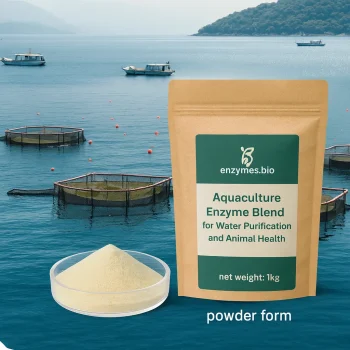 Akvakulturenzymer
Enzymblanding til akvakultur til vandrensning og dyresundhed
US$104.99 Tilføj til kurv Køb nu -
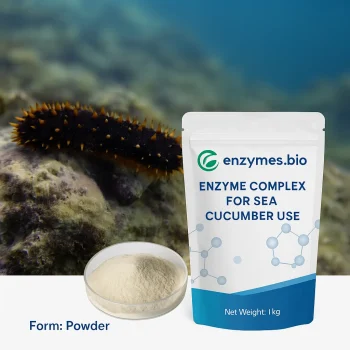
 Akvakulturenzymer
Søagurk-enzymkompleks - tilsætningsstof til akvakulturfoder
US$108.99 Tilføj til kurv Køb nu -
Akvakulturenzymer
Crab Enzyme Complex - Biologisk fodertilsætningsstof til krabber i akvakultur
US$108.99 Tilføj til kurv Køb nu -
-
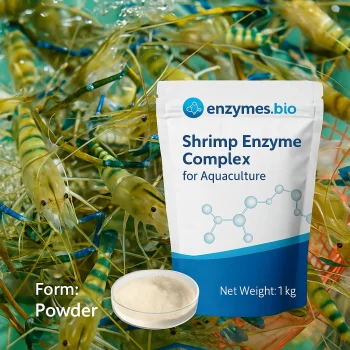
Akvakulturenzymer
Shrimp Enzyme Complex - Multi-enzym fodertilsætning til rejer
US$108.99 Tilføj til kurv Køb nu

Hvorfor skal man bruge fiskeforarbejdningsenzymer fra enzymes.bio?
Lav MOQ fra 1 kg
Fleksible ordremængder til R&D-prøver eller hele produktionsserier. Skaler op, når du er klar.
Tilpassede blandinger til rådighed
Har du brug for et specifikt enzymforhold eller et multi-enzymkompleks? Vores team formulerer skræddersyede blandinger til din proces.
Global forsendelse
DHL, FedEx og USPS leverer til mere end 180 lande. Koldkædeforsendelse tilgængelig for temperaturfølsomme enzymer.
Teknisk support
Vejledning til anvendelse og anbefalinger til dosering fra vores enzymspecialister.