
How Meat Processing Enzymes Work
Improved Tenderness Control
Optimize texture and reduce toughness with controlled protease meat processing solutions for red meat, poultry, and seafood.
Higher Yield Recovery
Increase protein extraction and by-product utilization through targeted enzymatic hydrolysis of meat and collagen streams.
Consistent Enzyme Activity
Standardized activity units and batch testing ensure predictable performance in large-scale meat industry operations.
Enzyme Types for Meat Processing Applications
ブロメライン
Natural plant-derived enzyme that tenderises meat by breaking down muscle proteins and collagen fibres.
中性プロテアーゼ
Improves tenderness, texture, and water-holding capacity in whole muscle and restructured meat products.
アルカリプロテアーゼ
Hydrolyzes meat byproducts and offal for protein meal, pet food, and hydrolysate production.
リパーゼ
Develops flavour compounds in cured meats and fermented sausages through controlled fat hydrolysis.
トリプシン
Digests collagen and connective tissue proteins for meat restructuring and efficient protein recovery.
Meat Processing Enzyme Guide: Functions, Dosage & Applications
ブロメライン
Meat Tenderizing via Myofibrillar Protein Hydrolysis
関数: Bromelain is a cysteine protease extracted from pineapple stem that preferentially cleaves myosin, collagen, and connective tissue proteins. Unlike heat tenderizing, bromelain acts at chilled temperatures (4–25°C), allowing it to work during marination or brining without cooking the meat. It targets both myofibrillar proteins (actin, myosin) and connective tissue, improving shear force values measurably.
典型的な投与量: 10–100 ppm (mg/kg) of meat weight. Activity: 100,000–600,000 GDU/g or 50,000–300,000 MCU/g. Lower dosage (10–30 ppm) for controlled tenderizing of premium cuts; higher dosage (50–100 ppm) for tenderizing tougher cuts or restructured meat products. Contact time: 30 minutes–4 hours at 2–8°C.
用途: Steak and chop tenderizing (marinades, injection, tumbling), restructured meat products, pet food protein hydrolysis, portion-control portion improvement. Widely used in hotel and food service supply chains.
ショップ・バルク Bulk Bromelain — 1,000–3,000 GDU/g for meat & nutraceuticals →
中性プロテアーゼ
Controlled Proteolysis for Aging Simulation & Flavor Development
関数: Neutral protease hydrolyzes muscle proteins at neutral pH (6.0–7.5) with moderate activity, mimicking the natural dry-aging proteolysis by endogenous enzymes (calpains). It releases umami-contributing peptides and amino acids (glutamate, IMP precursors) while minimizing the bitter peptides associated with alkaline proteases.
典型的な投与量: 0.005–0.02% w/w of meat weight. Activity: 50,000–400,000 U/g. Inject or tumble into meat at 2–8°C; contact time 2–12 hours. Enzyme is inactivated by cooking (>70°C). Lower dosage for subtle flavor enhancement; higher dosage for accelerated aging or protein hydrolyzate production.
用途: Accelerated dry-age simulation in wet-aged beef, cured and fermented meats, meat protein hydrolyzates for stock/flavoring, meat-based pet food flavor enhancement.
ショップ・バルク Bulk Protease — neutral, alkaline & acid protease for meat processing →
アルカリプロテアーゼ
Aggressive Protein Hydrolysis for Recovery & Hydrolyzate Production
関数: Alkaline protease operates at pH 7.5–11.0 and produces more aggressive, complete protein hydrolysis than neutral protease. It is preferred for collagen hydrolysis, mechanical deboning residue recovery, and production of functional meat protein concentrates. Less suitable for whole-muscle tenderizing due to bitterness potential at high dosage.
典型的な投与量: 0.01–0.05% w/w of substrate. Activity: 100,000–800,000 U/g. Temperature optimum: 40–55°C. Adjust pH to 7.5–9.0 for optimal activity. Inactivate by dropping pH below 4.5 or heating to >80°C.
用途: Mechanical deboning residue (MDR) processing, collagen hydrolyzate production (for gelatin alternatives), fish sauce/shrimp paste acceleration, animal by-product valorization, pet food ingredient production.
リパーゼ
Fat Hydrolysis for Flavor Development & Rendered Fat Processing
関数: Lipase hydrolyzes triglycerides in meat and animal fat into free fatty acids, monoglycerides, and glycerol. In cured and fermented meats (salami, prosciutto), controlled lipolysis generates flavor compounds. In rendered fat processing, lipase can modify fatty acid profiles or produce partial glycerides for food-grade emulsification applications.
典型的な投与量: 0.01–0.1% w/w of fat substrate. Activity: 10,000–100,000 LU/g. Temperature optimum: 30–45°C. Inactivated by heat >65°C.
用途: Fermented meat flavor development (dry-cured sausage, salami), rendered animal fat modification, lard partial hydrolysis, flavor compound production for meat seasonings.
ショップ・バルク Bulk Lipase — lipase for fat modification in cured & fermented meats →
トリプシン
Specific Serine Protease for Protein Digestion & Research Applications
関数: Trypsin is a serine endopeptidase that cleaves peptide bonds specifically at the C-terminal side of lysine and arginine residues. In meat processing, it is used for controlled functional protein modification and for production of bioactive peptides with specific cleavage patterns. Also used in research-grade protein digestion and pharmaceutical applications.
典型的な投与量: 0.001–0.05% w/w of protein substrate. Activity: 1,000–10,000 BAEE Units/mg. Temperature optimum: 37°C, pH 7.5–8.5. Inactivated by serine protease inhibitors or heat.
用途: Bioactive peptide production from muscle proteins, research-grade protein digestion, pharmaceutical collagen hydrolyzate production, cell culture trypsinization (tissue culture grade available).
Our Meat Processing Enzyme Products
-
販売!
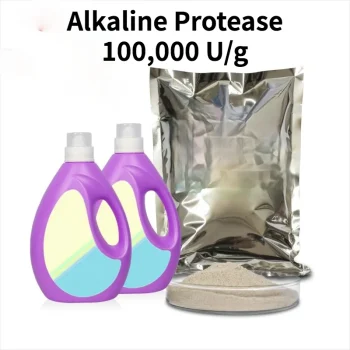 アルカリプロテアーゼ
アルカリプロテアーゼ 100,000 U/g 魚およびエビの切り身 加水分解プロテアーゼ バチルス・リケニフォルミスプロテアーゼ
$99.99元の価格は$99.99でした。$89.99現在の価格は$89.99です。 購入 -
販売!

-
販売!
-
販売!
-
販売!
Why Source Meat Processing Enzymes from enzymes.bio?
ゼラチン加水分解酵素 | 食品グレード
食品用途向けゼラチン加水分解酵素、酵素処理に最適で、ゲル化や澄明化に使用されます。
カスタムブレンド可能
特定の酵素比率またはマルチ酵素複合体が必要ですか?私たちのチームは、お客様のプロセスに合わせてカスタムブレンドを調合します。.
グローバル配送
DHL、FedEx、USPSによる180カ国以上へのフルフィルメント。温度変化に敏感な酵素については、コールドチェーン輸送が可能です。.
テクニカルサポート
酵素のスペシャリストによるアプリケーションガイダンスと投与量の推奨。.