Brewing Enzymes Bulk Supplier for Industry

enzymes.bio is a beer brewing enzyme supplier providing consistent bulk volumes for breweries, food manufacturers, processors & formulators. We support commercial production with reliable supply, documentation & technical data.

How Brewing Enzymes Work

Enzymes are biological catalysts that accelerate specific biochemical reactions. In brewing enzymes, they deliver measurable results without harsh chemicals.

Bulk Production Ready

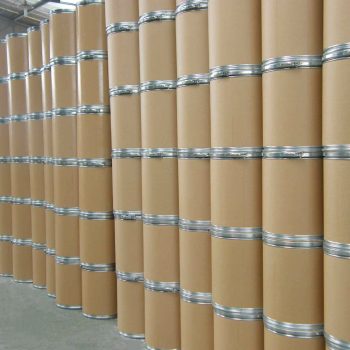
High-activity brewing enzymes supplied in drums or totes to support continuous beer production at industrial scale.

Process Optimization

Targeted enzyme solutions improve starch conversion, viscosity reduction & clarification efficiency across mashing, fermentation & finishing.

Full Technical Documentation

Each shipment includes COA, activity specifications, stability data & application guidance for quality control compliance.

Enzyme Types for Brewing Applications

Select the right enzyme for your process. We supply single enzymes and multi-enzyme blends for brewing enzymes applications.
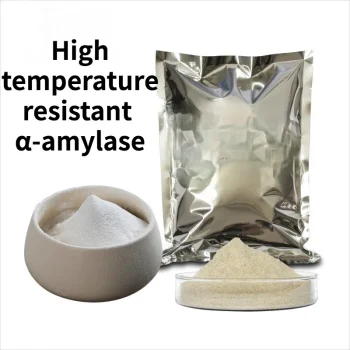
Alpha-Amylase

Breaks down starch to fermentable dextrins during mashing for consistent wort production.

Glucoamylase

Converts dextrins to glucose for complete fermentation, producing dry or low-carb beer styles.

Beta-Glucanase

Degrades beta-glucans from barley and oats to reduce wort viscosity and improve filtration.

Neutral Protease

Breaks down proteins to improve chill haze stability, foam retention, and yeast nutrition.

Beta-Amylase

Cleaves maltose from dextrins to boost fermentable sugar content and increase alcohol yield.

Brewing Enzyme Guide: Functions, Dosage & Applications

Alpha-Amylase

Starch Liquefaction for High-Adjunct Mashes & Distillery

Function: Alpha-amylase randomly cleaves α-1,4 glycosidic bonds in starch, rapidly reducing viscosity and producing soluble dextrins. It is essential when brewing with unmalted adjuncts (corn, rice, cassava, sorghum) that lack the native amylase content of malted barley. Thermostable variants remain active at 85–95°C for simultaneous saccharification applications.

Typical dosage: 0.01–0.1% w/w of grain or mash. Activity: 10,000–40,000 SKB/g (Sandstedt-Kneen-Blish units). Add at mash-in; contact time 30–60 minutes at 60–72°C (mesophilic) or 85–95°C (thermostable). Confirmed by iodine starch test.

Applications: High-adjunct lager brewing, rice beer, corn-based brewing, sorghum beer (Africa), whisky and grain spirit mash liquefaction, bioethanol production.

Shop bulk: Bulk Amylase — bacterial alpha-amylase for high-adjunct mashing →

Browse alpha-amylase products →

Glucoamylase

Complete Saccharification for Dry Beer & Distillery

Function: Glucoamylase (amyloglucosidase) cleaves both α-1,4 and α-1,6 bonds in dextrins, releasing glucose monomers. Unlike alpha-amylase, glucoamylase completes fermentation by converting all dextrins to fermentable glucose — producing a fully attenuated, dry, low-carbohydrate beer. It is the primary saccharification enzyme in distillery and light beer production.

Typical dosage: 0.01–0.1% w/w of grain. Activity: 10,000–100,000 AGU/g. Add at saccharification stage (60–65°C, pH 4.0–5.5). Can be added directly to fermenter for simultaneous saccharification and fermentation (SSF). pH optimum is more acidic than alpha-amylase.

Applications: Light beer (reduced calorie), dry beer, craft lager attenuation correction, whisky/grain spirit saccharification, bioethanol, gluten-free beer from enzyme-treated barley.

Shop bulk: Bulk Amylase — glucoamylase for complete saccharification & dry beer →

Browse glucoamylase products →

Beta-Glucanase

Viscosity Reduction for Lautering & Filtration

Function: Beta-glucanase degrades beta-glucans — cell wall polysaccharides from barley, wheat, and oats that dissolve in wort and dramatically increase viscosity. High wort viscosity causes lautering problems (stuck mash, poor runoff rate) and downstream filtration difficulties. Beta-glucanase breaks these polysaccharides into small oligosaccharides, restoring normal wort flow.

Typical dosage: 100–500 U/L wort. Add during mash protein rest (45–52°C) or directly to mash. For Botrytis-infected grain (higher beta-glucan content), increase dosage 2–3×. Activity: 10,000–100,000 U/g.

Applications: High-adjunct mashes, poorly modified malt, wheat beer and hefeweizen (high beta-glucan), rye beer, oat stout, low-quality barley malts in cost-reduced recipes.

Browse beta-glucanase products →

Neutral Protease

Free Amino Nitrogen (FAN) for Yeast Nutrition & Haze Reduction

Function: Neutral protease hydrolyzes barley and adjunct proteins during the mash protein rest, producing free amino nitrogen (FAN) — the primary nitrogen source for yeast during fermentation. Insufficient FAN causes sluggish fermentation, off-flavors (H₂S, fusel alcohols), and poor yeast health. Protease also degrades haze-forming protein-polyphenol complexes, improving chill haze stability.

Typical dosage: 0.01–0.05% w/w of grain. Activity: 50,000–400,000 U/g. Add at protein rest (45–52°C, pH 5.2–5.8, 15–30 minutes). Target wort FAN: >150 mg/L for healthy fermentation. Do not over-proteolyze — excessive protease destroys head retention proteins.

Applications: High-adjunct brewing (maize, rice), unmalted grain mashes, haze-free lager production, gluten-free beer (combined with glucoamylase), craft beer FAN correction.

Shop bulk: Bulk Protease — neutral protease for FAN production & haze reduction →

Browse neutral protease products →

Beta-Amylase

Maltose Production for Fermentability & High-Gravity Brewing

Function: Beta-amylase cleaves maltose units from the non-reducing ends of starch chains, producing the primary fermentable sugar in beer wort. While malted barley contains native beta-amylase, high-temperature mashing, high-adjunct loads, or poor malt quality can limit fermentability. Supplemental beta-amylase ensures complete conversion of available starch to maltose.

Typical dosage: 0.005–0.05% w/w of grain. Activity: 100–2,000 Deg/g. Temperature optimum: 60–65°C, pH 5.3–5.8. Denatured above 70°C — must be added during low-temperature saccharification stage.

Applications: High-gravity brewing (>14°P), light lager (maximal fermentability), malt-extract production, Scotch whisky mash for high fermentable extract, corn-heavy adjunct recipes.

Shop bulk: Bulk Amylase — beta-amylase for maltose production & fermentability →

Browse beta-amylase products →

Our Brewing Enzyme Products

Browse our full range of 21 brewing enzymes products. All products available in bulk quantities with technical data sheets and COA on request.

Why Source Brewing Enzymes from enzymes.bio?

Low MOQ from 1 kg

Flexible order quantities for R&D samples or full production runs. Scale up when ready.

Custom Blends Available

Need a specific enzyme ratio or multi-enzyme complex? Our team formulates custom blends for your process.

Global Shipping

DHL, FedEx, and USPS fulfillment to 180+ countries. Cold-chain shipping available for temperature-sensitive enzymes.

Technical Support

Application guidance and dosage recommendations from our enzyme specialists.

Frequently Asked Questions

We supply alpha-amylase, glucoamylase, beta-glucanase, neutral protease, and beta-amylase — all brewing-grade with activity certificates. Other brewing enzymes (cellulase, xylanase, pullulanase) available on request.
Alpha-amylase randomly cleaves starch into dextrins (liquefaction) — fast and effective at 60–95°C, but leaves unfermentable dextrins. Glucoamylase then cleaves those dextrins all the way down to glucose (saccharification) — used when complete attenuation or high alcohol yield is required. For standard beer, use alpha-amylase only; for dry beer, distillery, or light beer, use both in sequence.
Add beta-glucanase if you experience: slow lautering/runoff, high wort viscosity, filtration difficulties, or if you are using high-adjunct mashes, wheat/oat/rye above 20% of grain bill, poorly modified malt, or Botrytis-infected grain. A simple viscosity test at 20°C on first runnings (should be <3 cP for easy filtering) can confirm the need. Dosage: 100–500 U/L, added at protein rest (45–52°C).
Target wort FAN of ≥150 mg/L for a healthy lager or ale fermentation (>200 mg/L for high-gravity ≥16°P). If your wort FAN falls below this due to high adjunct rates or under-modified malt, add neutral protease at the protein rest (45–52°C, 20 min). Dosage: 0.01–0.03% w/w grain. Verify FAN with Ninhydrin or OPA spectrophotometric assay.
Yes. For certified gluten-free beer from barley, use glucoamylase + neutral protease + beta-glucanase in the mash to fully hydrolyze starch and solubilize protein. The resulting beer has undetectable gluten by ELISA (R5 competitive method <5 ppm). Note: barley malt-based "gluten-free" beer may not be accepted in all markets — check local labeling regulations. Alternative: brew with certified GF grains (millet, rice, buckwheat).
Yes. Each brewing enzyme comes with a TDS covering activity units (SKB, AGU, U/g), temperature and pH optimum, recommended dosage, and shelf life. CoA per batch available on request.
MOQ is 1 kg for enzyme powders and 5 L for liquid concentrates. We supply craft breweries, regional breweries, distilleries, and bioethanol producers of all scales.
Add enzyme powders or liquid concentrates at mash-in with the water before adding grain, or directly to the mash at the appropriate temperature step. For alpha-amylase, add at the starch conversion step (63–72°C). For glucoamylase or beta-glucanase, add at protein rest or saccharification step. For SSF applications, add glucoamylase directly to the fermenter.
Powder enzymes: 12–24 months at ≤25°C, sealed packaging. Liquid enzymes: 12–18 months at 2–8°C. Thermostable alpha-amylase is more stable than standard mesophilic variants. Store away from moisture and heat.
Yes. We can formulate blended enzyme preparations for adjunct mash conversion, gluten reduction, viscosity control, or high-gravity fermentation — combining alpha-amylase, glucoamylase, beta-glucanase, and protease at optimized activity ratios. MOQ 5 kg, lead time 2–4 weeks.

Start Sourcing Brewing Enzymes Today

Contact our team to request specifications, pricing and bulk supply options for your beer production line.