Thermostable Alpha-Amylase For Starch Hydrolysis
Introduction
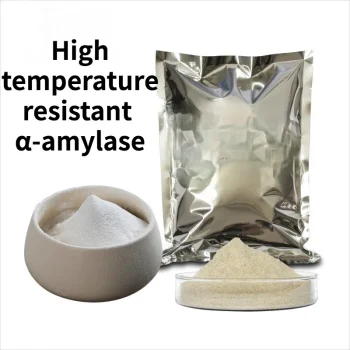
Thermostable Alpha-Amylase (CAS 9000-92-4) is produced by submerged fermentation of Bacillus licheniformis followed by purification and formulation. This high-temperature-resistant enzyme liquefies starch and reduces viscosity during gelatinization, bringing significant benefits to starch sugar processing, brewing, and industrial starch conversion.
Mechanism
This product belongs to the family of endo-hydrolytic enzymes, cleaving alpha-1,4 glycosidic bonds within starch molecules. It randomly hydrolyzes starch into dextrin, oligosaccharides, and a small amount of glucose. The thermostable nature allows it to operate at high temperatures (85-110 C), making it ideal for jet-cooking and continuous liquefaction processes.
Characteristics
| Declared Activity | 20,000 U/ml or higher |
| Physical Form | Liquid |
| Optimal Temperature | 85-95 C (active up to 110 C) |
| Optimal pH | 5.5-7.0 |
| Color | Light yellow to brown |
| Odor | Slight fermentation odor |
| CAS Number | 9000-92-4 |
Applications
- Starch Sugar Processing: Liquefaction of corn, wheat, potato, and cassava starch for glucose, maltose, and high-fructose syrup production.
- Brewing and Distilling: Starch liquefaction in mashing to improve extract yield and reduce viscosity.
- Bioethanol Production: High-temperature starch liquefaction for efficient fermentation feedstock preparation.
- Textile Industry: Desizing of woven fabrics by removing starch-based sizing agents.
- Paper Industry: Starch modification for surface sizing and coating applications.
Dosage: 0.02-0.06% (w/w of starch, dry basis). Optimal dosage depends on substrate concentration, temperature, and process requirements.
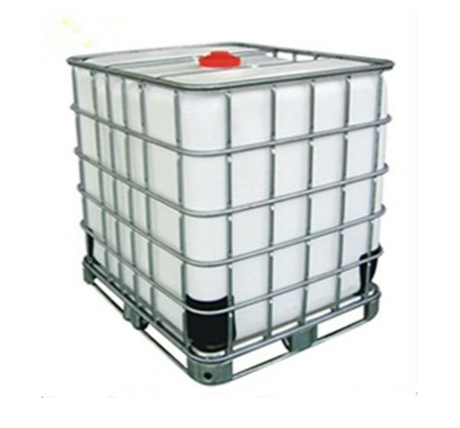
Package: 1 kg / bottle, 25 kg / drum