Bulk Baking Enzymes Manufacturer for Industry

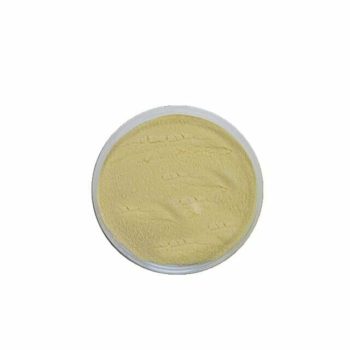
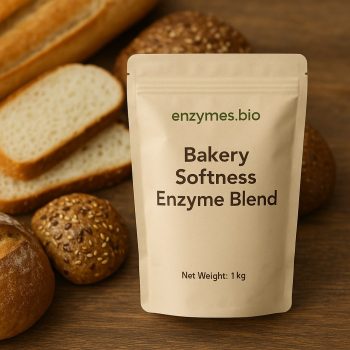
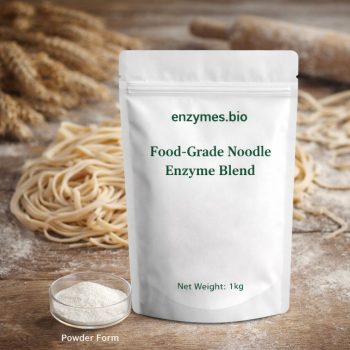
enzymes.bio is a bakery enzymes manufacturer supplying food-grade baking enzymes in bulk to manufacturers, processors & formulators worldwide. We provide consistent activity, technical documentation & scalable supply for industrial production.

How Baking Enzymes Work

Enzymes are biological catalysts that accelerate specific biochemical reactions. In baking enzymes, they deliver measurable results without harsh chemicals.

Optimized Dough Performance

Improve dough stability, machinability & gas retention across automated bread, bun & laminated dough lines.

Consistent Product Quality

Standardized enzyme activity ensures uniform crumb structure, volume & texture batch after batch.

Reliable Bulk Supply

Industrial-scale production with stable lead times for large volume contracts in the enzymes baking industry.

Enzyme Types for Baking Applications

Select the right enzyme for your process. We supply single enzymes and multi-enzyme blends for baking enzymes applications.
Άλφα-αμυλάση

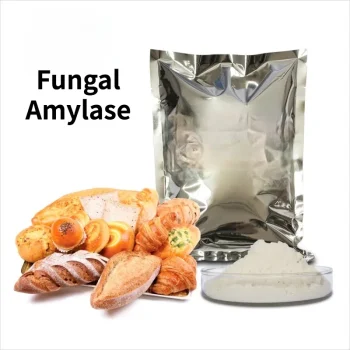
Breaks down starch into fermentable sugars, improving loaf volume, crumb softness, and crust color.

Μαλτογενής αμυλάση

Delays starch retrogradation to extend bread softness and shelf life in packaged bakery products.

Οξειδάση γλυκόζης

Strengthens the gluten network by oxidising glucose, improving dough elasticity and gas retention.

Λιπάση

Modifies flour lipids for natural emulsification, improving crumb structure and dough tolerance.

Ξυλανάση

Degrades arabinoxylans in wheat flour to improve dough handling, water absorption, and loaf volume.

Baking Enzyme Guide: Functions, Dosage & Applications

Each enzyme class targets a different substrate in flour. Understanding the mechanism helps you choose the right enzyme, set the correct dosage, and avoid common formulation errors.

Άλφα-αμυλάση

Starch Conversion for Dough Fermentation & Crust Color

Λειτουργία: Alpha-amylase cleaves internal α-1,4 glycosidic bonds in starch, releasing maltose and dextrin fragments that yeast ferments into CO₂. This accelerates fermentation, increases oven spring, deepens crust color via the Maillard reaction, and prevents over-firm crumb on cooling.

Τυπική δοσολογία: 1–10 ppm of flour weight. Standard powder activity: 10,000–40,000 U/g. Overdosing causes sticky, gummy crumb (‘amylase damage’) — always validate at scale before production. Thermostable variants extend activity into the oven.

Εφαρμογές: Pan bread, dinner rolls, sweet goods, crackers, flatbreads. Essential in flour standardization for millers. Often combined with xylanase for synergistic volume improvement.

Shop bulk: Bulk Amylase — alpha-amylase, glucoamylase & maltogenic amylase →

Αναζήτηση προϊόντων α-αμυλάσης →

Xylanase (Hemicellulase)

Arabinoxylan Breakdown for Loaf Volume & Water Management

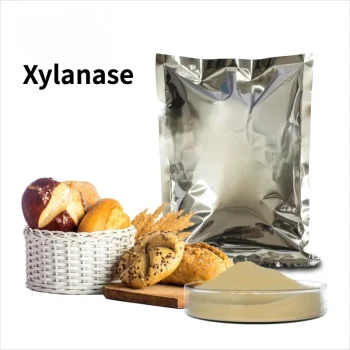
Λειτουργία: Xylanase hydrolyzes arabinoxylans (pentosans) in wheat flour cell walls. Arabinoxylans bind 10× their weight in water, competing with gluten for hydration. Xylanase releases this bound water back into the dough, improving gluten development, extensibility, and gas-holding capacity.

Τυπική δοσολογία: 0.5–5 ppm of flour weight. Activity: 5,000–50,000 XU/g. Works synergistically with alpha-amylase — combination typically increases loaf volume by 8–20% over either enzyme alone. Dosage depends on flour arabinoxylan content (higher in whole wheat).

Εφαρμογές: Whole wheat bread, baguette, high-fiber loaves, pan bread, hamburger buns. Particularly effective in high-extraction flours where arabinoxylan content is elevated.

Shop bulk: Bulk Xylanase — baking-grade & feed-grade xylanase →

Browse xylanase products →

Πρωτεάση

Gluten Relaxation for Crackers, Pizza & Cookie Doughs

Λειτουργία: Protease cleaves peptide bonds in gluten proteins, reducing elasticity and dough resistance. Unlike amylase and xylanase, protease is used where less gluten strength is desirable — in crackers, cookies, and thin-crust pizza where extensibility must exceed elasticity.

Τυπική δοσολογία: 1–20 ppm of flour weight. Activity: 100,000–800,000 U/g (papain-based or microbial). Lower dosage for partial relaxation; higher dosage for reducing mix time by 15–30% in high-protein flour blends.

Εφαρμογές: Crackers, biscuits, pizza dough, soft cookies, flat breads, steamed buns. Also used to improve dough extensibility without tearing in high-protein blends.

Shop bulk: Bulk Protease — acid, neutral & alkaline protease for baking →

Browse protease products →

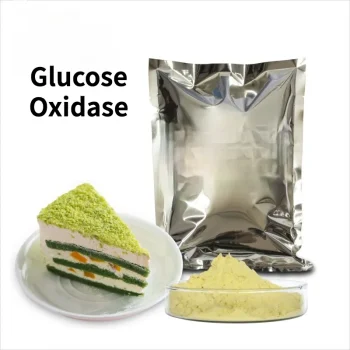
Οξειδάση γλυκόζης

Chemical-Free Dough Strengthening & Oxidation

Λειτουργία: Glucose oxidase (GOX) oxidizes glucose to gluconic acid, producing hydrogen peroxide as a by-product. The H₂O₂ oxidizes sulfhydryl groups in gluten proteins, forming disulfide bonds that tighten the gluten network — a clean-label alternative to potassium bromate or ascorbic acid.

Τυπική δοσολογία: 5–30 ppm of flour weight. Activity: 10,000–50,000 U/g. Effect is dose-dependent and flour-specific. Works best with adequate fermentation time. Often combined with lipase for synergistic crumb improvement.

Εφαρμογές: Industrial pan bread, long-fermentation sourdough, frozen dough, high-hydration baguettes. Particularly valuable in markets where chemical oxidizers are restricted.

Browse glucose oxidase products →

Λιπάση

Crumb Structure, Natural Emulsification & Shelf Life Extension

Λειτουργία: Lipase hydrolyzes wheat lipids to produce lysophospholipids — natural emulsifiers that interact with gluten proteins and starch granules. This mimics synthetic emulsifiers (DATEM, SSL) while remaining clean-label. Result: finer crumb, improved dough tolerance, and extended freshness.

Τυπική δοσολογία: 10–50 ppm of flour weight. Activity: 10,000–100,000 LU/g. Lower dosage for subtle crumb improvement; higher for full emulsifier replacement. Combine with maltogenic amylase for maximum shelf life extension (1–3 extra days freshness).

Εφαρμογές: Pan bread, sandwich bread, toast, burger buns, soft rolls, brioche. Effective in DATEM-free or clean-label product ranges.

Shop bulk: Bulk Lipase — baking lipase for emulsification & crumb structure →

Browse lipase products →

Our Baking Enzyme Products

Browse our full range of 23 baking enzymes products. All products available in bulk quantities with technical data sheets and COA on request.

Why Source Baking Enzymes from enzymes.bio?

Χαμηλό MOQ από 1 kg

Ευέλικτες ποσότητες παραγγελίας για δείγματα Ε&Α ή πλήρη παραγωγή. Κλιμάκωση όταν είστε έτοιμοι.

Διαθέσιμα προσαρμοσμένα μείγματα

Χρειάζεστε μια συγκεκριμένη αναλογία ενζύμων ή ένα σύμπλεγμα πολλαπλών ενζύμων; Η ομάδα μας διαμορφώνει προσαρμοσμένα μείγματα για τη διεργασία σας.

Παγκόσμια ναυτιλία

DHL, FedEx και USPS σε 180+ χώρες. Διατίθεται αποστολή ψυχρής αλυσίδας για ένζυμα ευαίσθητα στη θερμοκρασία.

Τεχνική υποστήριξη

Καθοδήγηση εφαρμογής και συστάσεις δοσολογίας από τους ειδικούς μας στα ένζυμα.

Συχνές ερωτήσεις

We supply single enzymes and enzyme blends including alpha-amylase, maltogenic amylase, glucose oxidase, lipase, xylanase (hemicellulase), and protease. All products are food-grade with activity certificates and technical data sheets available on request.
Typical dosage is 1–10 ppm of flour weight, depending on the activity level (10,000–40,000 U/g) and your flour’s native amylase content. Always start at the lower end and validate at scale — excess amylase causes sticky, gummy crumb. For thermostable alpha-amylase, dosage may differ; refer to the product TDS.
Yes — xylanase is especially effective in whole wheat and high-extraction flours, which contain higher arabinoxylan content than refined white flour. It releases water bound to arabinoxylans, improving dough hydration, extensibility, and loaf volume. Recommended starting dosage in whole wheat: 2–5 ppm, combined with alpha-amylase for synergistic volume improvement.
They target completely different substrates. Alpha-amylase attacks starch (a glucose polymer), breaking it into fermentable sugars that fuel yeast. Xylanase attacks arabinoxylans (pentosans in cell walls), releasing bound water and improving dough extensibility. Both improve loaf volume but through different mechanisms — which is why they are often used in combination. Maltogenic amylase is a third type, working post-baking to delay starch retrogradation and extend shelf life.
Baking enzymes are classified as processing aids, not ingredients, because they are denatured by oven heat and leave no active residue in the finished product. Most organic certification bodies (EU Organic, USDA Organic) permit processing aids that meet the technical necessity standard. However, approval depends on your specific certifier and region. We can provide documentation supporting processing-aid status for your certification application.
Yes. Every product is supplied with a technical data sheet specifying activity (U/g or equivalent units), recommended dosage range, pH and temperature optimum, storage conditions, and shelf life. Certificates of Analysis (CoA) are issued per batch. Contact us for TDS files before ordering.
MOQ is typically 1 kg per product for standard enzyme powders. Custom blends (two or more enzyme types combined to your specification) start at 5 kg. We supply bakeries, premix manufacturers, and ingredient distributors of all sizes — from R&D labs ordering 1 kg samples to commercial manufacturers ordering 500+ kg per shipment.
Enzyme powders are dry-blended with flour or added during premix preparation before dough mixing. Dosage is optimized based on flour protein content, water absorption, and target process. Liquid enzyme concentrates can be dosed directly into dough water. We provide application guidance with every order.
Most food-grade baking enzymes have a shelf life of 12–24 months when stored at ≤25°C in original sealed packaging away from moisture. Thermostable preparations typically have higher stability. Opened bags should be resealed and used within 3 months. Full shelf life data is listed on each product page and TDS.
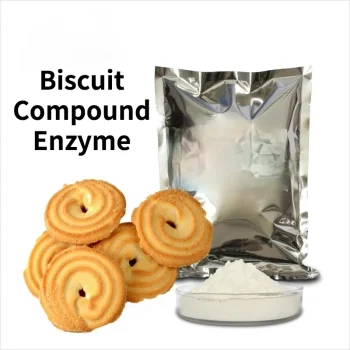
Yes. We develop compound bakery enzyme blends tailored to specific applications — sandwich bread, steamed buns, crackers, frozen dough, and more. Custom blends combine amylase, xylanase, lipase, glucose oxidase, and protease at defined activity ratios. Minimum order for custom blends is 5 kg. Lead time is 2–4 weeks for new formulations.

Start Sourcing Bulk Baking Enzymes

Contact our team to request specifications, samples & volume pricing for your production needs.