





Lysozyme de qualité alimentaire en poudre à haute activité, en vrac
| Ingrédient principal | Lysozyme |
| Fonction | Conservation des aliments, conservation des aliments, alimentation animale |
| Numéro CAS | 12650-88-3 |
| Formule moléculaire | C15H20O4 |
| Poids de la formule | 2899.27014 |
| Densité | N / A |
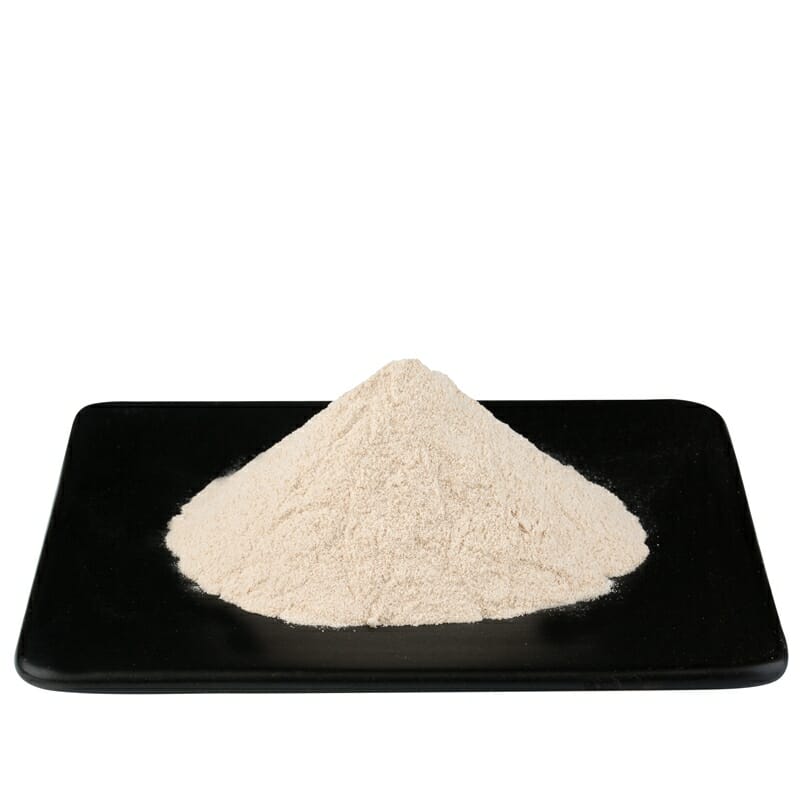
| Couleur | Brun clair |
| Domaines d'application | Additif alimentaire |
Fonction et application
Le lysozyme joue un rôle particulier dans l'hydrolyse de la paroi cellulaire microbienne, également appelé enzyme de dissolution de la paroi cellulaire. Il est largement répandu dans la nature, notamment dans le blanc d'œuf où le lysozyme constitue environ 3,4% - 3,5% de la protéine totale, ce qui en fait un représentant typique des enzymes de lyse.
Fonction
- En tant que conservateur naturel, Le lysozyme présente de nombreux avantages uniques tels que de fortes propriétés antimicrobiennes, l'innocuité, une bonne stabilité thermique et un large éventail d'applications.
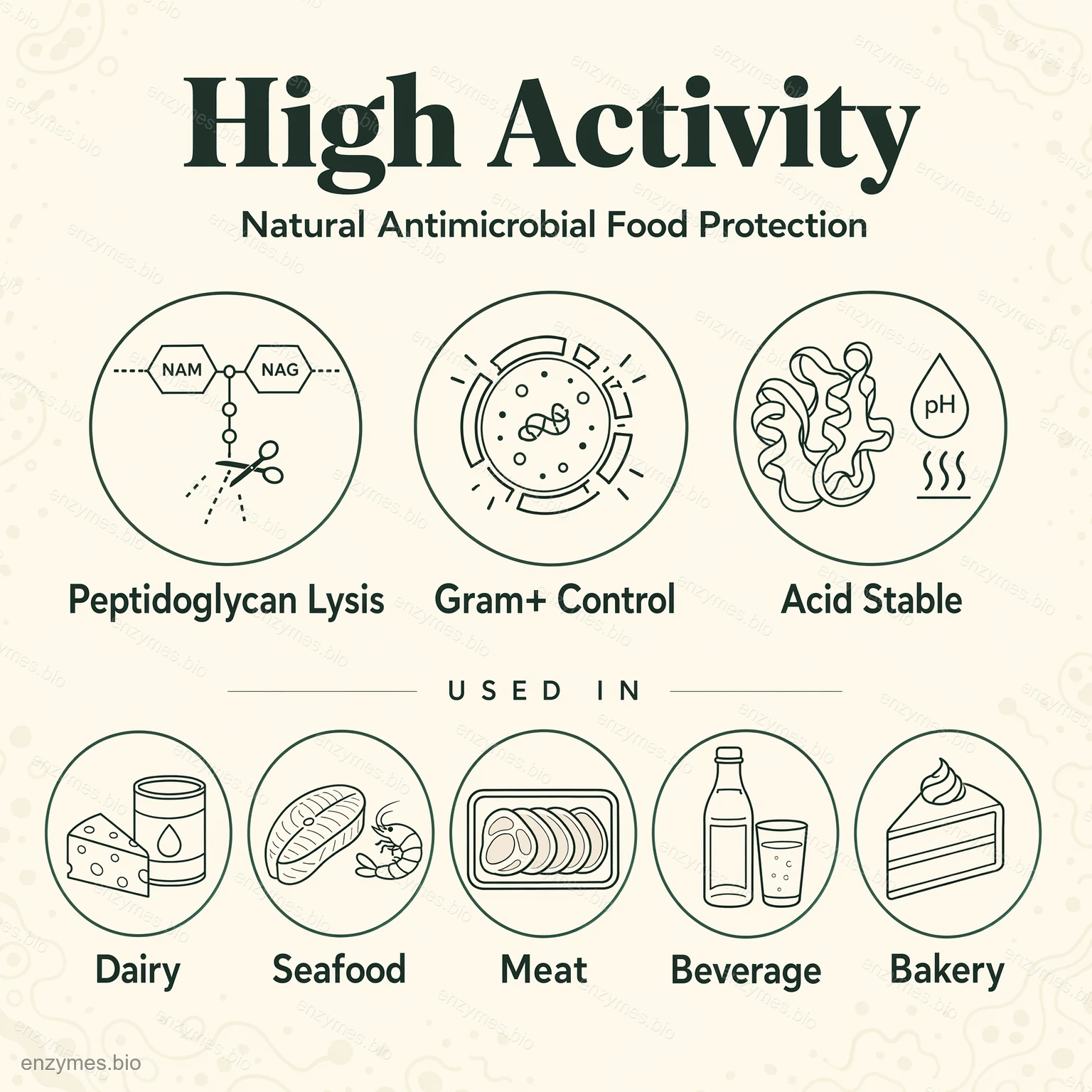
Le lysozyme est une protéine relativement stable malgré les variations de pH et thermostable en milieu acide. Grâce à des techniques de bio-ingénierie permettant de réguler son pH et de l'isoler par chromatographie sur résine échangeuse d'ions, nous obtenons une enzyme de haute qualité, présentant une activité supérieure à 18 000 U/g et conforme aux normes alimentaires.
– Le lysozyme peut dissoudre les cellules bactériennes, en particulier contre les bactéries Gram-positives, ce qui est comparable à celui des antibiotiques. Il y parvient en dissolvant les polysaccharides des parois membranaires des glycoprotéines (mucinoïdes) et en décomposant la chitine et la chitine glycol en carbonate, chlorhydrate et cristallisation de nitrate.
Application
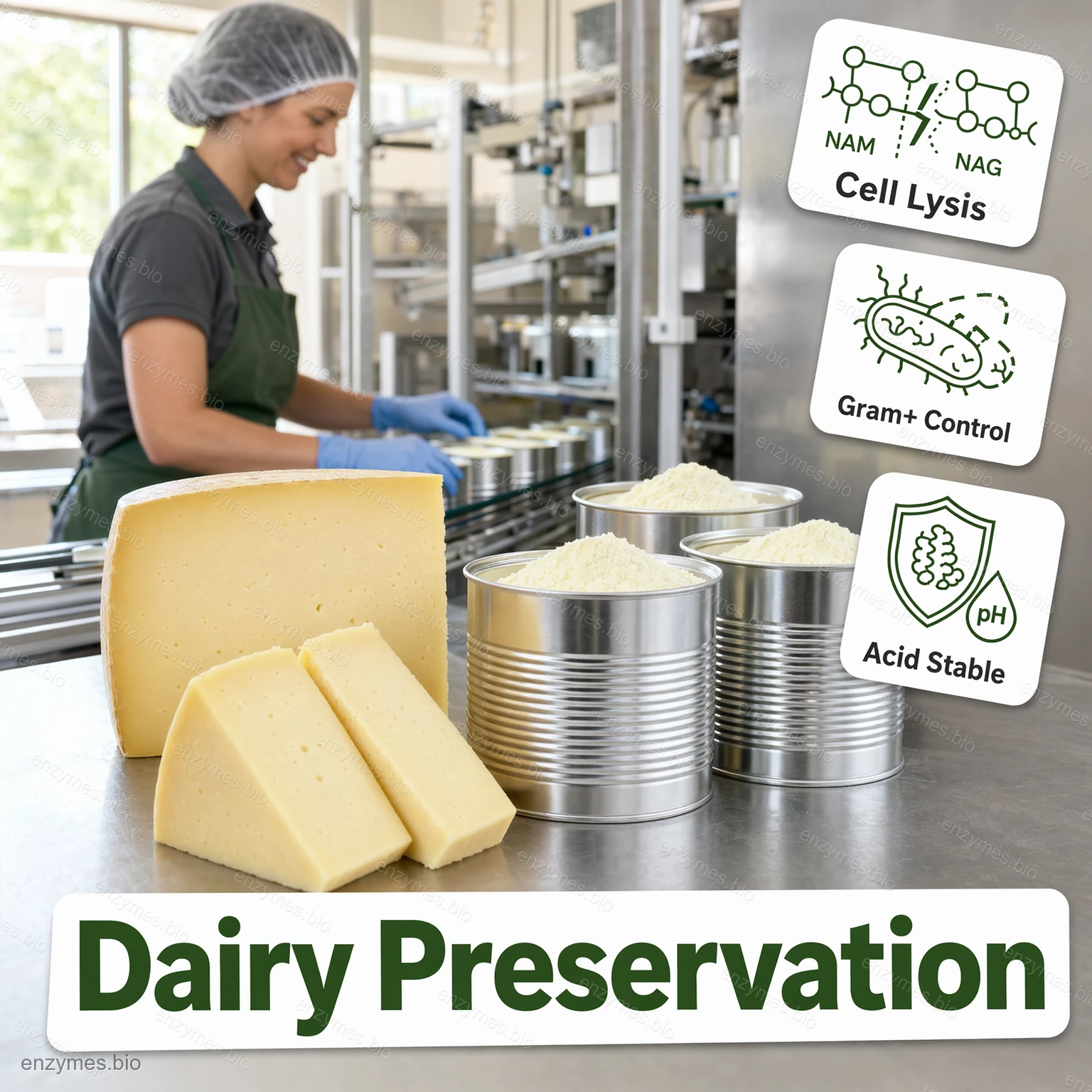
Le lysozyme est une protéine avirulente sans effets secondaires et possède certaines propriétés lytiques, ce qui le rend adapté à une utilisation dans des applications médicales, la conservation des aliments et l'alimentation animale. Il a été largement utilisé dans les produits aquatiques, la viande, les gâteaux, le vin, le vin de riz et les boissons en tant qu'agent antimicrobien. De plus, il peut être ajouté au lait en poudre pour inhiber la croissance de micro-organismes nocifs tout en offrant des avantages lorsqu'il est utilisé directement ou indirectement.